Peer Review Procces
The peer-review process is the core of scientific publishing and relies heavily on peer reviewers with expertise relevant to the subject matter of the submitted manuscript. Therefore, the Editor-in-Chief, handling editors, and peer reviewers play essential roles in ensuring that the peer-review process is conducted appropriately and rigorously. The peer-review process at the Journal of Tropical Pharmacy and Chemistry is as follows:
-
Manuscript Submission: The submitting author submits the manuscript through the Open Journal Systems (OJS) of the Journal of Tropical Pharmacy and Chemistry.
-
Initial Screening: The Editor-in-Chief conducts an initial assessment to determine whether the manuscript is consistent with the aims and scope of the Journal of Tropical Pharmacy and Chemistry. If the manuscript falls outside the journal's scope, the Editor-in-Chief may reject the manuscript directly (desk rejection). Manuscripts may also be rejected at this stage if they demonstrate insufficient originality or serious scientific deficiencies.
-
Editor Assignment: If the manuscript is considered relevant to the journal's aims and scope and meets the minimum editorial and scientific requirements, the Editor-in-Chief assigns the manuscript to a handling editor for further peer review. The assigned editor should have expertise relevant to the scientific content of the manuscript. In exceptional cases, a manuscript of outstanding quality may be accepted directly at this stage.
-
Peer Reviewer Assignment: The handling editor invites 2–3 peer reviewers with appropriate expertise to conduct a substantive evaluation of the manuscript.
-
Peer reviewers are asked to assess whether the manuscript is scientifically logical and coherent, whether it substantially duplicates previously published work, and whether the manuscript is sufficiently clear and suitable for publication.
-
Peer reviewers are not expected to correct or edit the language of the manuscript, as language improvement is not the primary responsibility of the peer-review process and may be addressed by the handling editor during the editorial process.
-
Peer reviewers are selected carefully to avoid potential conflicts of interest between the authors and reviewers. Among other considerations, reviewers and authors should not be affiliated with the same institution. The journal applies a double-blind peer-review process in which the identities of both authors and reviewers are concealed.
-
The peer-review process is expected to take approximately 4–8 weeks.
-
-
Revision Decision: After receiving the reviewers' comments and recommendations, the handling editor decides whether to accept, reject, or return the manuscript to the corresponding author for revision. Two types of revision may be requested:
-
Minor Revision: The handling editor reviews the revised manuscript directly without necessarily sending it back to the original peer reviewers.
-
Major Revision: The revised manuscript is generally returned to the original peer reviewers for further evaluation before the handling editor makes a subsequent editorial decision.
-
-
Re-evaluation: After the authors submit a revised manuscript, the handling editor evaluates the revisions and determines whether the reviewers' comments and editorial requirements have been adequately addressed. When necessary, particularly following a major revision, the manuscript may undergo a second round of peer review.
-
Final Decision: The final decision to accept or reject a manuscript rests with the handling editor, taking into consideration the recommendations of the peer reviewers, the quality and adequacy of the revisions, and other journal requirements, including the similarity index, which must not exceed 20%. The editorial decision is final, and authors may not dispute or challenge the final editorial decision.
The average time from initial manuscript submission to the first editorial decision is approximately 6–10 weeks. If the revision process proceeds smoothly, the estimated time from initial submission to publication is approximately 12–16 weeks.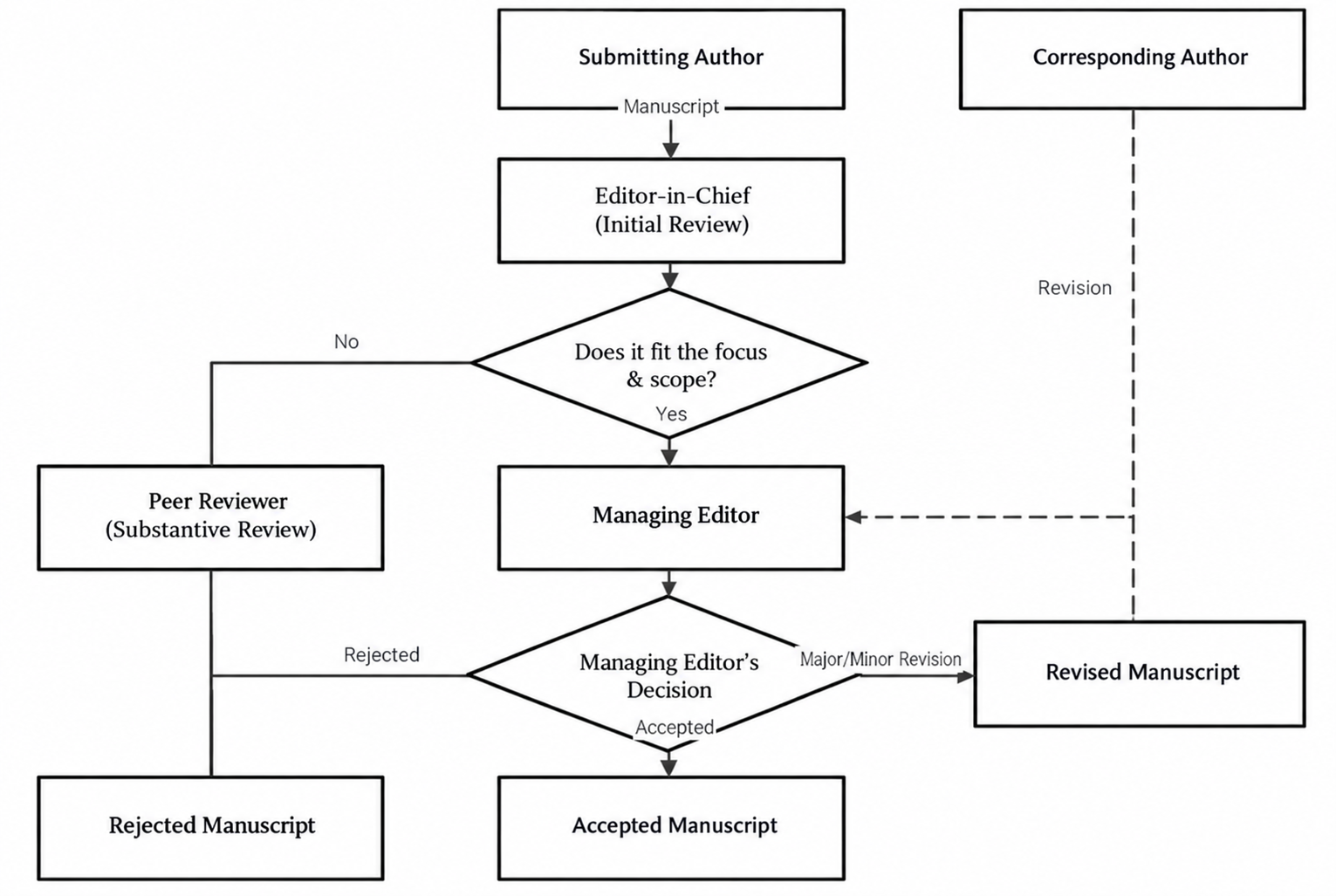
If you are not currently serving as a peer reviewer for the Journal of Tropical Pharmacy and Chemistry but are interested in joining our reviewer pool, please contact us.
The benefits of becoming a reviewer for the Journal of Tropical Pharmacy and Chemistry include the opportunity to access and evaluate the latest research in relevant fields at an early stage, as well as receiving formal recognition through inclusion in our reviewer list. You may also include your reviewer contributions to the Journal of Tropical Pharmacy and Chemistry as part of your academic portfolio or professional development record.
Reviewers for the Journal of Tropical Pharmacy and Chemistry serve as volunteers who contribute their expertise to the advancement of scientific knowledge. Therefore, the journal does not provide financial compensation for peer-review activities.
If you are interested in becoming a reviewer for the Journal of Tropical Pharmacy and Chemistry, please contact us by email at jtpc@ff.unmul.ac.id.